SHOD OR BAREFOOT: HOW TO CHOOSE FOR YOUR HORSE?
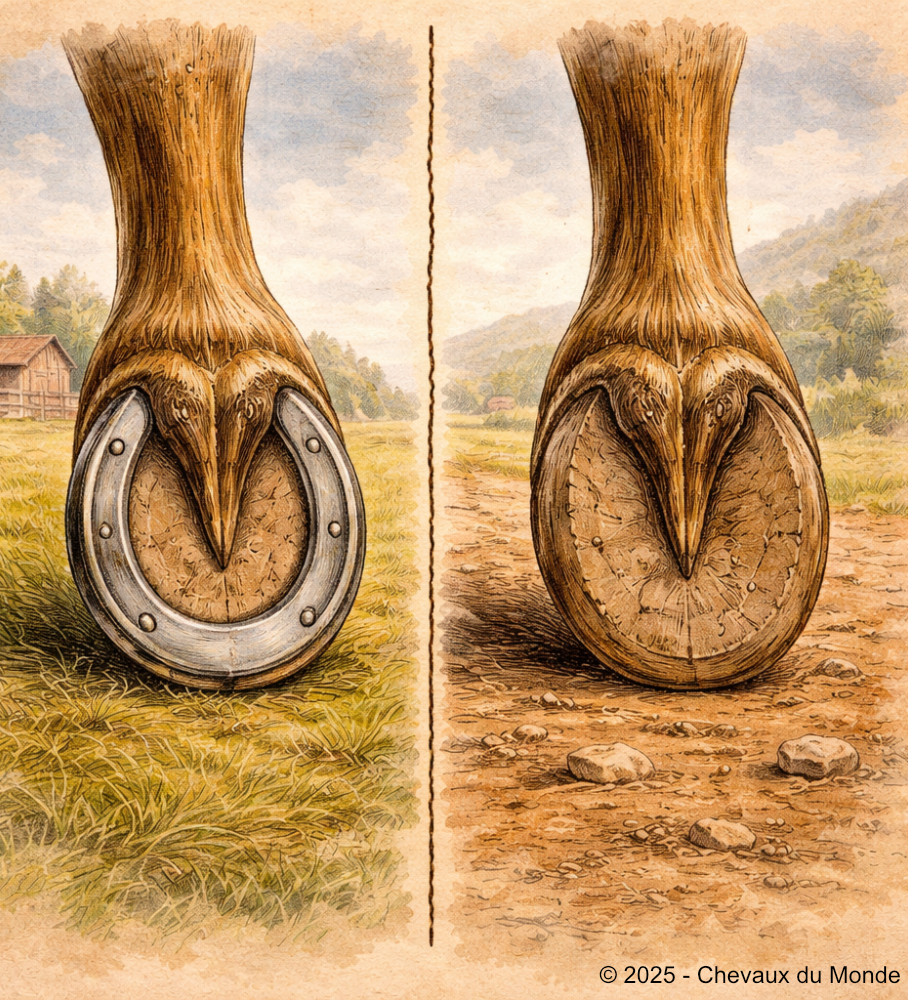
Comparison between a shod and a barefoot hoof, highlighting the frog and how the hoof adapts to different ground conditions
The question of horseshoes is one of the most debated in the equestrian world. On one side, a centuries-old tradition that has proven itself in the field. On the other, a growing movement advocating for the return to the bare hoof, in the name of animal welfare and natural biomechanics. Between ideology and pragmatism, how do you make the right choice for your horse? Here is a complete guide, free from dogmatism.
Understanding the Horse's Hoof: The Foundation of Everything
Before choosing between shod and barefoot, it is essential to understand what a healthy hoof is and how it works.
The Structure of the Hoof
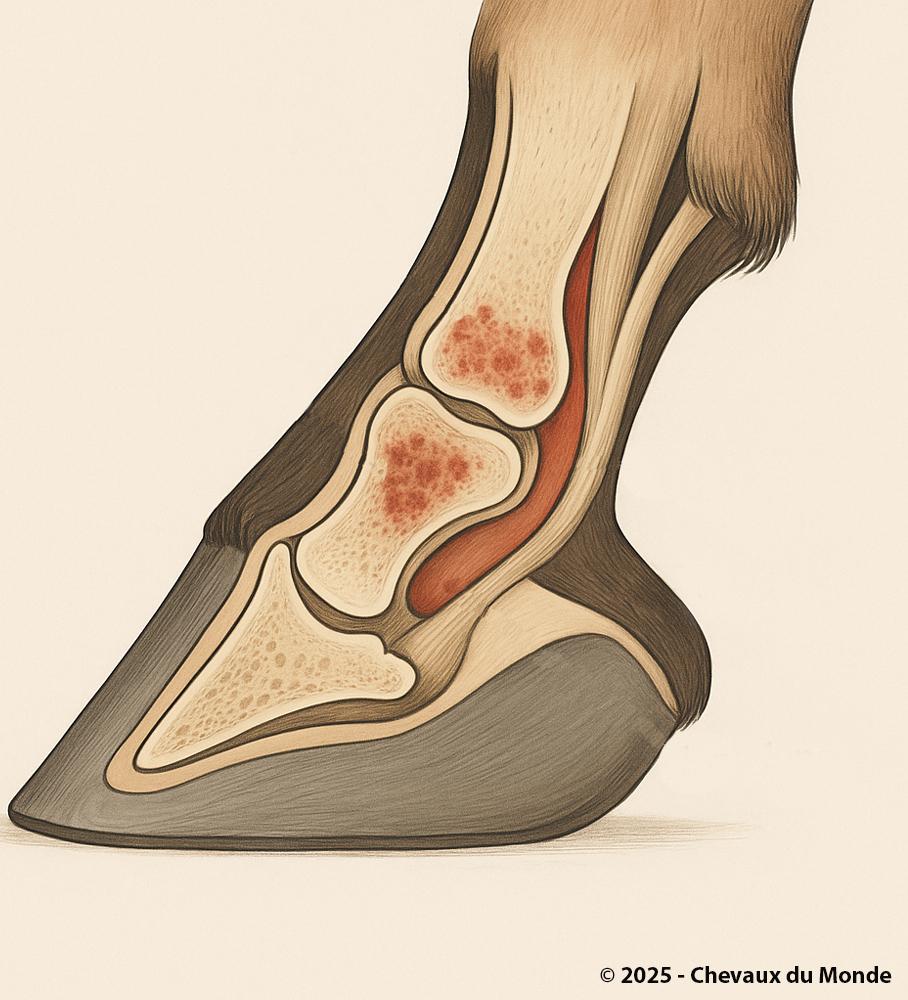
The hoof is far more than a rigid horn casing. It is a complex biomechanical system that fulfils several functions simultaneously:
- Shock absorption: with each stride, the hoof capsule expands slightly under the horse's weight, absorbing impact before it reaches the joints
- Circulatory pump: this repeated expansion and compression pushes blood upward through the limb, playing a crucial role in circulation to the extremities
- Proprioception: the sole and frog transmit sensory information to the nervous system, allowing the horse to constantly adjust its balance
- Traction and stability: the natural morphology of the hoof provides grip across a variety of terrain
What Shoeing Fundamentally Changes
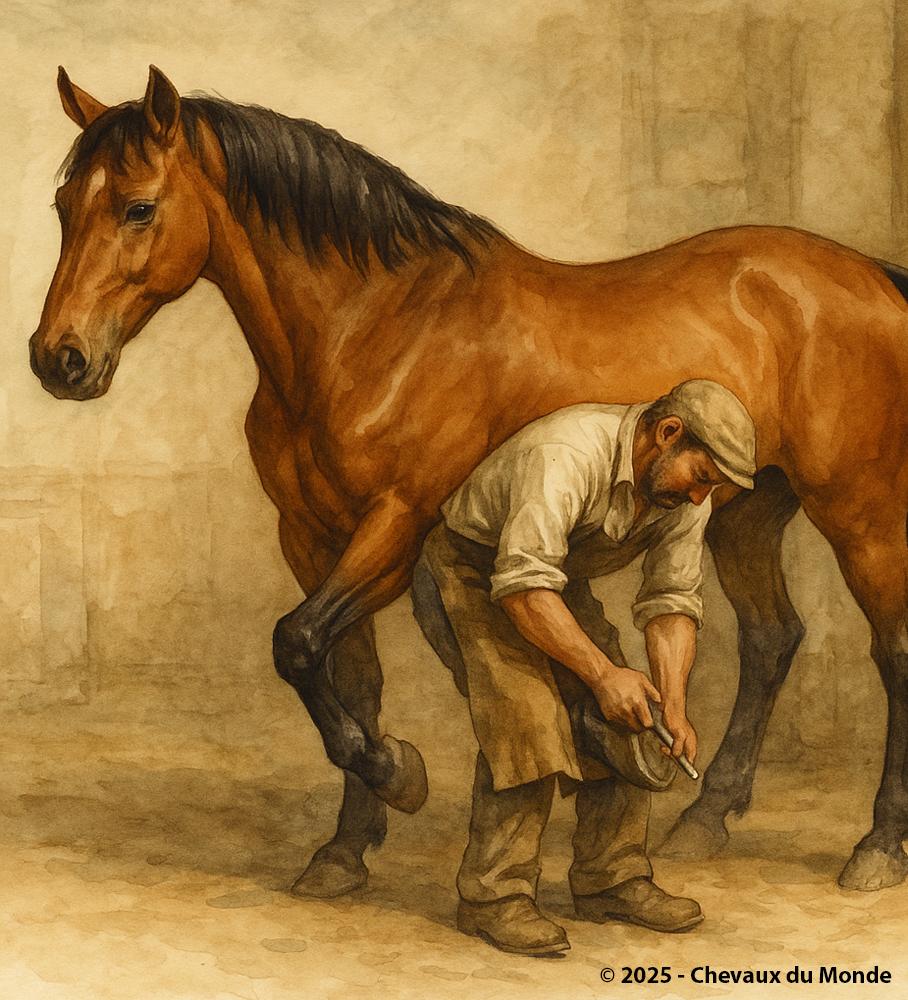
Fitting a shoe changes this system. The shoe partially rigidifies the hoof capsule, reduces its natural expansion, and alters the way impact is transmitted to the internal structure. This is not necessarily negative — it is simply a biomechanical reality that must be taken into account.
The Shod Horse: Benefits, Indications and Limitations
Why Shoe a Horse?
Shoeing arose from a simple observation: the domestic horse lives in very different conditions from those for which its hoof was designed. Hard surfaces, tarmac roads, intense and repeated effort, rich feeding — all factors that can weaken a bare hoof that is insufficiently adapted.
A shoe provides several concrete benefits:
- Mechanical protection on abrasive terrain (roads, gravel, frozen ground)
- Increased stability for horses with poor limb alignment or fragile hooves
- Orthopaedic support in pathological cases (chronic laminitis, navicular syndrome, conformational issues)
- Traction and safety in specific disciplines (studded shoes for mountain endurance, specialist shoeing for harness trotting)
When Is Shoeing the Right Choice?
Certain situations make shoeing particularly relevant, or even essential:
Horse profile:
- Naturally thin, fragile or crumbling hooves
- Poor limb alignment requiring correction
- History of hoof pathologies (laminitis, navicular syndrome)
- Older horse whose horn quality has deteriorated over the years
Work context:
- Intensive work on hard or abrasive surfaces
- High-level competition (show jumping, dressage, racing, long-distance endurance)
- Regular use on roads or stony tracks
- Cold climate with frozen or icy ground
Veterinary indications:
- Corrective or orthopaedic shoeing prescribed by a vet
- Post-operative hoof support
The Limitations and Drawbacks of Shoeing
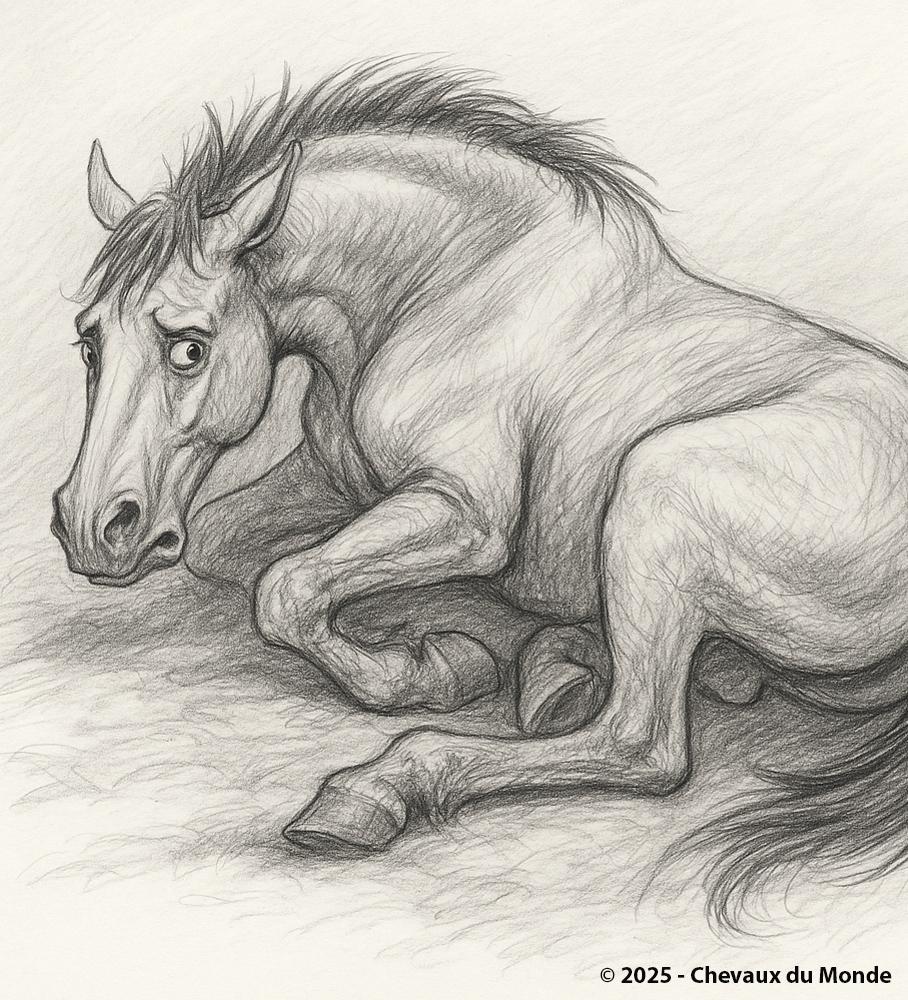
Shoeing is not without its downsides. A poorly fitted, ill-adapted or overdue shoe can cause serious damage.
- Reduced blood circulation in the foot due to diminished natural expansion
- Frog atrophy if it no longer makes proper ground contact
- Risk of lameness from a poorly fitted shoe, misplaced nail or overdue shoeing
- Recurring cost: a full set of shoes every 6 to 8 weeks represents a significant annual expense
- Dependence on the farrier: a shod horse cannot go long without professional attention
The Barefoot Horse: Principles, Benefits and Requirements
The Barefoot Movement: Where Does It Come From?
The barefoot movement emerged in the 1990s, largely through the work of German researcher Hiltrud Strasser and, later, Jaime Jackson in the United States. Observing wild horses — whose hooves remain healthy without any human intervention — prompted a rethink of what shoes actually do to the domesticated hoof.
The core idea is straightforward: a properly maintained hoof, on a well-fed horse living on varied terrain, can go without shoes and progressively adapt to most uses.
The Benefits of the Bare Hoof
- Optimal circulation: without a shoe, the hoof expands and contracts freely with each stride, promoting blood flow throughout the limb
- Enhanced proprioception: direct ground contact strengthens sensory feedback, improving balance and coordination
- Progressive strengthening of the horn, frog and sole over time
- Long-term savings: no shoeing every six weeks, only regular trimming at a lower cost
- Fewer shoeing-related risks: no nails, no pulled shoes, no mechanically induced lameness
The Essential Conditions for a Successful Transition
Barefoot is not something to be improvised. It relies on several non-negotiable conditions:
Diet Horn quality depends directly on diet. A horse receiving too much sugar (cereals, lush spring grass) will develop poor-quality horn. Going barefoot is often accompanied by a complete review of the feed ration.
Terrain A barefoot horse needs varied terrain to stimulate and harden its hooves: grass, earth, fine gravel, sand. A horse living exclusively on concrete or standing mud will not develop healthy feet.
Movement The hoof strengthens through movement. A horse standing in a paddock all day will have weaker feet than one living in a herd across open ground. Freedom of movement is a key factor in barefoot success.
Follow-up from a qualified professional Barefoot trimming is not the same as preparation trimming before shoeing. It requires a specific approach, ideally carried out by an equine podiatrist or a farrier trained in these methods.
The Transition: A Delicate Period
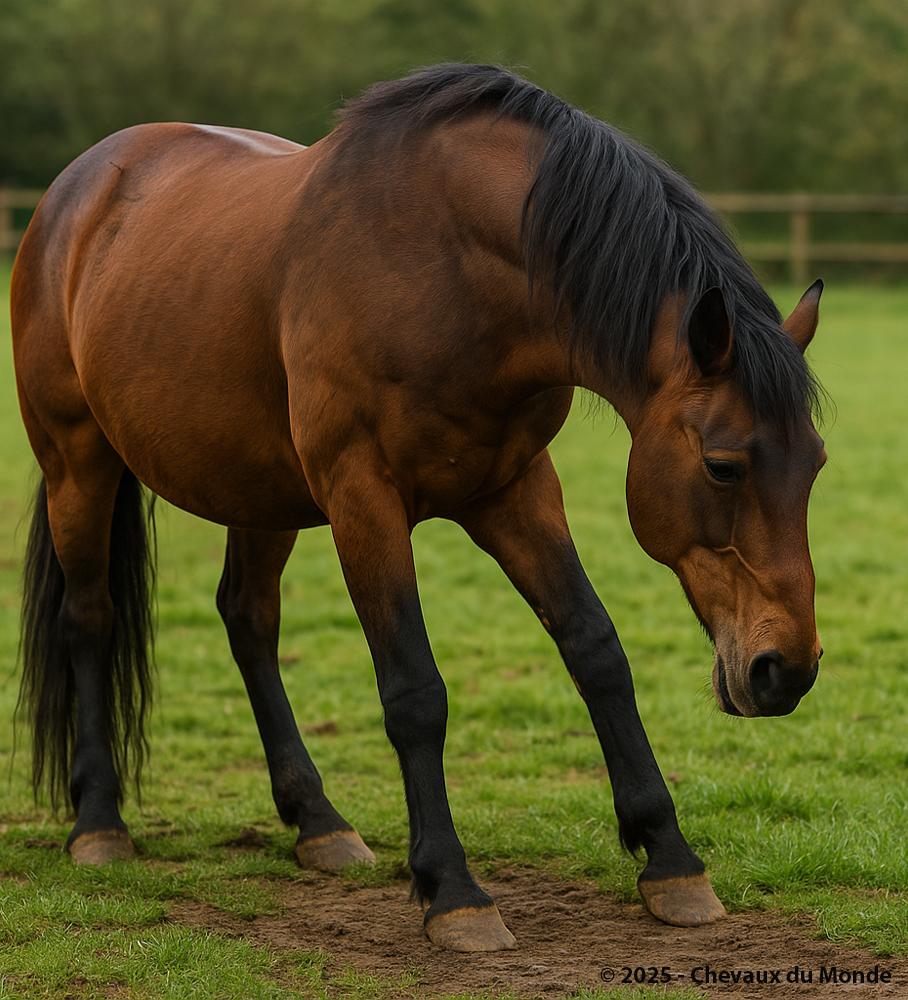
Removing shoes from a horse that has worn them for years is not an overnight process. The hoof will often have lost some of its natural resilience, and the sole can be sensitive.
The transition typically takes 6 to 18 months depending on the horse. During this period, it is normal for the horse to be uncomfortable on certain surfaces. Protective hoof boots can be used temporarily to maintain work without causing pain.
Hoof Boots: The In-Between Solution
Hoof boots deserve a section of their own, as they are often the key to a successful transition.
What Are Hoof Boots For?
Hoof boots are removable protective covers fitted to the hoof before a ride and removed afterwards. They allow owners to:
- Protect a hoof in transition on terrain that is too hard or abrasive
- Work on roads or compete with a barefoot horse
- Provide temporary support during a hoof pathology
The Most Widely Used Models
Several brands and models exist for different uses: Scoot Boots, Cavallo, Renegade, Easyboot — each with its own advantages depending on hoof morphology and work intensity. The right choice is often found through trial and error, and it is advisable to seek guidance from a barefoot professional before investing.
How to Decide: The Right Questions to Ask
There is no universal answer. Here are the practical questions to consider before making a decision.
Questions About the Horse
- What is the current condition of his hooves? Are they thick and strong, or thin and fragile?
- Does he have a history of hoof pathologies?
- What is his age and level of work?
- What is he fed? Is his diet compatible with going barefoot?
Questions About the Environment
- What type of ground does he live on day to day?
- Does he have access to varied surfaces, or is he confined to a single paddock?
- What is the main working surface (sand arena, tracks, roads)?
Questions About Use
- What is his work programme? Intensive, regular or occasional?
- Does he compete with specific technical requirements?
- Is he used on particularly challenging terrain (mountains, rocky ground)?
The Role of the Vet and Hoof Professional
Whatever decision is made, professional advice is essential. An equine vet can assess the overall condition of the hoof, diagnose any underlying pathologies and guide owners toward the most appropriate solution.
The farrier or equine podiatrist, depending on the option chosen, will provide ongoing follow-up. It is important to choose a professional trained in the chosen approach: a farrier unfamiliar with barefoot methods will not be the best advisor for a transition to bare hooves, and vice versa.
What Does Science Say?
Research on the subject is still relatively limited, but several conclusions are emerging:
- Biomechanical studies confirm that the bare hoof shows better expansion and therefore more efficient circulation than the shod hoof
- Comparative studies on sport horses show that well-adapted barefoot horses achieve equivalent performance to their shod counterparts on soft ground
- However, on hard and abrasive terrain, the mechanical protection of a shoe remains difficult to match without additional equipment such as boots
- Orthopaedic shoeing remains, to date, the reference treatment for certain severe pathologies such as acute chronic laminitis
Shod and Barefoot: Can You Combine Both?
Yes, and it is often the most pragmatic solution. Some owners opt for partial shoeing: front shoes only (the forelimbs bear approximately 60% of the horse's weight), bare behind. Others alternate depending on the season, training period or terrain.
The key is to adapt the decision to the horse, not the other way around.
In Summary: Which Choice for Which Horse?
More likely shod if:
- The horse works intensively on hard or abrasive surfaces
- He has poor limb alignment or a history of hoof issues
- He competes with specific technical requirements
- His diet or environment does not allow for a smooth transition
More likely barefoot if:
- The horse lives freely on varied terrain
- His diet is balanced and low in sugars
- His work programme is regular but moderate
- The owner is willing to invest time in the transition and ongoing monitoring
In all cases:
- Consult a vet and a hoof professional before deciding
- Never remove shoes abruptly without proper support
- Reassess regularly as the horse's situation evolves
The question is not about who is right between the advocates of shoes and those of bare hooves. It is about what your horse, in your specific context, needs in order to be both healthy and able to perform.